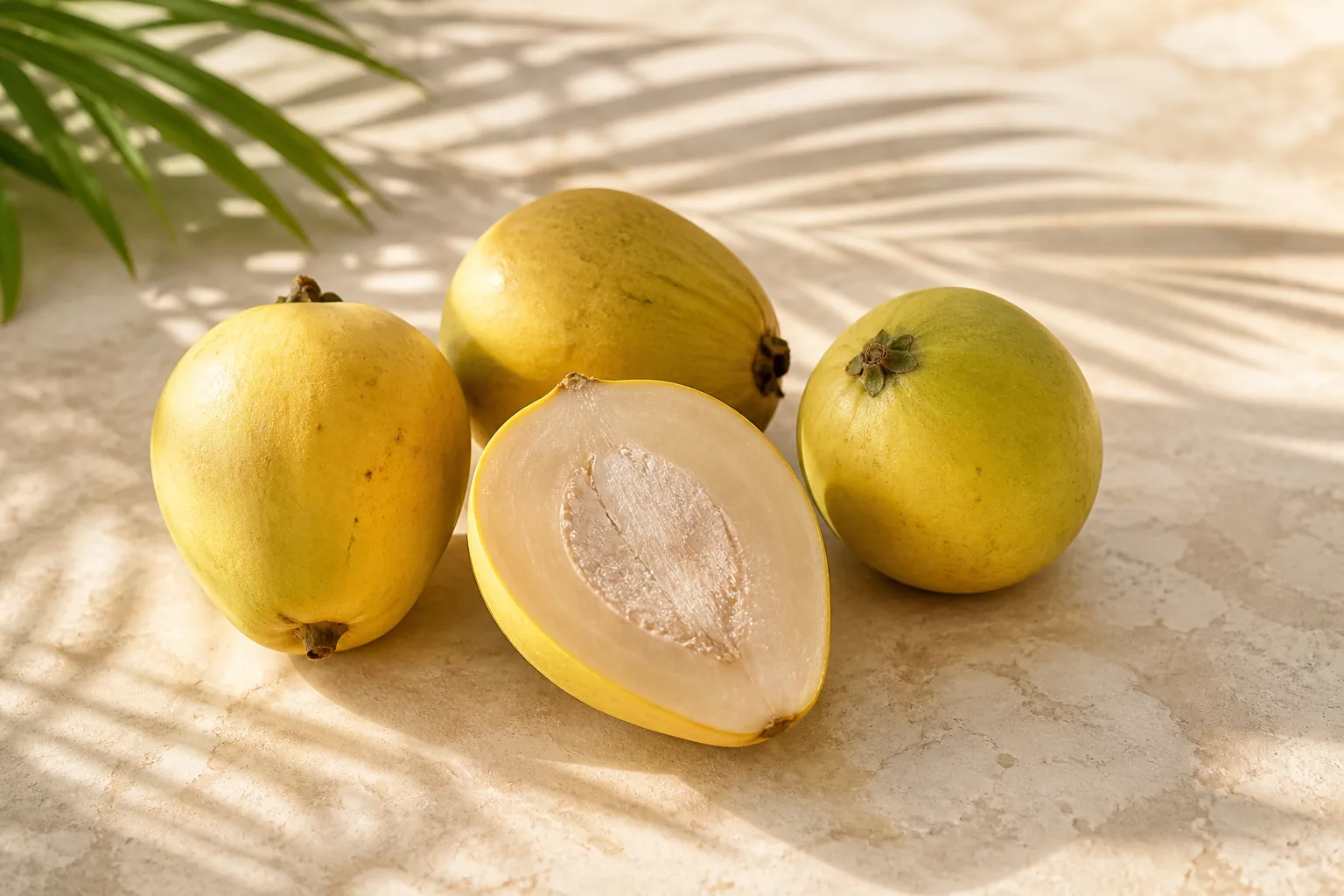
QUICK ANSWER
How many calories are in abiyuch?
Raw abiyuch contains 69 calories per 100 g. The selected USDA record is relatively high in water and supplies 5.3 g of fibre and 54.1 mg of vitamin C per 100 g; a source-held half-cup weight of 114 g works out to about 79 calories.
69 kcal / 100 gNutrition values describe a reference food state, not every individual item. Variety, water content, preparation and portion weight can change the estimate.
THE NUMBERS
Abiyuch nutrition facts per 100 g
The table below uses the reference state shown at the top of this page. Keeping one gram basis makes it easier to compare foods before translating the values to the portion you actually ate.
Source: USDA FoodData Central SR Legacy record 167782. Values may be rounded for readability.
SERVING SIZE
Calories by portion and serving weight
Words such as “small,” “medium,” “half” and “one piece” are convenient but imprecise. Grams make the estimate reproducible, particularly when natural foods vary in size.
MACROS
Carbohydrate, protein and fat explained
Carbohydrate
Abiyuch is primarily a carbohydrate food: 17.6 g per 100 g, including the fibre reported in the same record.
Protein
The 1.5 g of protein per 100 g is modest, so abiyuch is not a substitute for a dedicated protein food.
Fat
At 0.1 g per 100 g, plain raw abiyuch contains very little fat; toppings and recipe ingredients need separate entries.
MORE THAN CALORIES
Fibre, vitamins and minerals
One food does not need to provide every nutrient. These are the characteristics most useful for understanding where abiyuch fits in a varied eating pattern.
Fibre
The selected raw record lists 5.3 g per 100 g, a meaningful contribution for a fresh fruit.
Vitamin C
USDA reports 54.1 mg per 100 g in this record. Natural variation and storage can change an individual fruit.
Potassium
The record supplies 304 mg per 100 g.
Water
Water accounts for 79.9 g of each 100 g reference portion.
FOOD STATE MATTERS
How preparation changes the nutrition estimate
A reliable calorie entry should describe the food you actually ate—not merely a food with a similar name.
Fully ripe and raw
This page uses ripe raw edible flesh. UF/IFAS notes that mature abiu changes from green toward yellow as it ripens.
Picked too early
UF/IFAS reports that immature fruit can contain abundant sticky white latex and be unpleasant to eat; do not treat an underripe fruit as equivalent.
Frozen dessert
Sorbets and ice creams add recipe ingredients and require a recipe-specific calculation.
Juiced or blended
Use the edible grams and include every added liquid or sweetener; the source-held half-cup weight describes raw fruit, not juice.
PRACTICAL CONTEXT
How abiyuch can fit different goals
There is no universal “good” or “bad” food. Portion, frequency, the rest of the meal, preferences and individual health needs all matter.
Fibre goals
The 5.3 g-per-100 g figure makes fibre one of this record’s most notable features.
Vitamin C intake
The selected record is a meaningful vitamin C source, while no single fruit needs to carry the whole diet.
Lower-fat meals
Plain raw abiyuch contributes almost no fat.
Calorie tracking
Use edible grams or the USDA 114 g half-cup weight rather than assuming every whole fruit has the same yield.
QUALITY & SAFETY
How to choose, store and prepare it
Choose
Select mature fruit showing a partial colour break through full yellow; dark golden fruit may be overripe.
Ripen
UF/IFAS advises finishing ripening at room temperature, commonly over one to five days.
Refrigerate
Once fully ripe, refrigerate and use within several days, following the fruit’s condition.
Prepare
Wash under running water before cutting, then exclude peel and any discarded material from the logged weight.
PHOTO LOGGING
How to log abiyuch more accurately
A food photo can suggest the ingredient, but it cannot always reveal exact weight, hidden oil or preparation details. These checks turn an image guess into a better estimate.
- 01
Confirm that the fruit was raw and fully ripe.
- 02
Weigh only edible flesh; do not include peel or discarded latex-bearing material.
- 03
Use 114 g only when the portion genuinely resembles the USDA half-cup measure.
- 04
Log sugar, dairy, coconut milk or other recipe ingredients separately.
COMMON QUESTIONS
Abiyuch calorie and nutrition questions
How many calories are in half a cup of abiyuch?
The USDA record assigns 114 g to half a cup, which calculates to about 78.7 calories.
Is abiyuch the same as abiu?
Abiyuch is the name used by this USDA record; horticultural sources commonly use abiu for Pouteria caimito.
Can abiyuch be eaten before it turns yellow?
UF/IFAS advises harvesting at maturity and notes that fruit picked too early can contain unpleasant sticky latex.
Is abiyuch high in fibre?
The selected record lists 5.3 g per 100 g.
Does freezing change the calories?
Freezing plain fruit does not add calories, but sweetened frozen desserts are different recipes.
KEEP EXPLORING
Related food guides
SOURCES & METHOD
Where these numbers come from
Values describe raw abiyuch per 100 g edible portion. The 114 g half-cup weight is held by the same USDA record; other gram examples are explicitly calculated.
Open USDA FoodData Central SR Legacy record 167782 ↗Used for maturity, ripening, latex and refrigeration guidance.
Page reviewed 26 August 2026. We show the food state, gram basis and source record so readers can check the estimate instead of treating one number as universally exact.