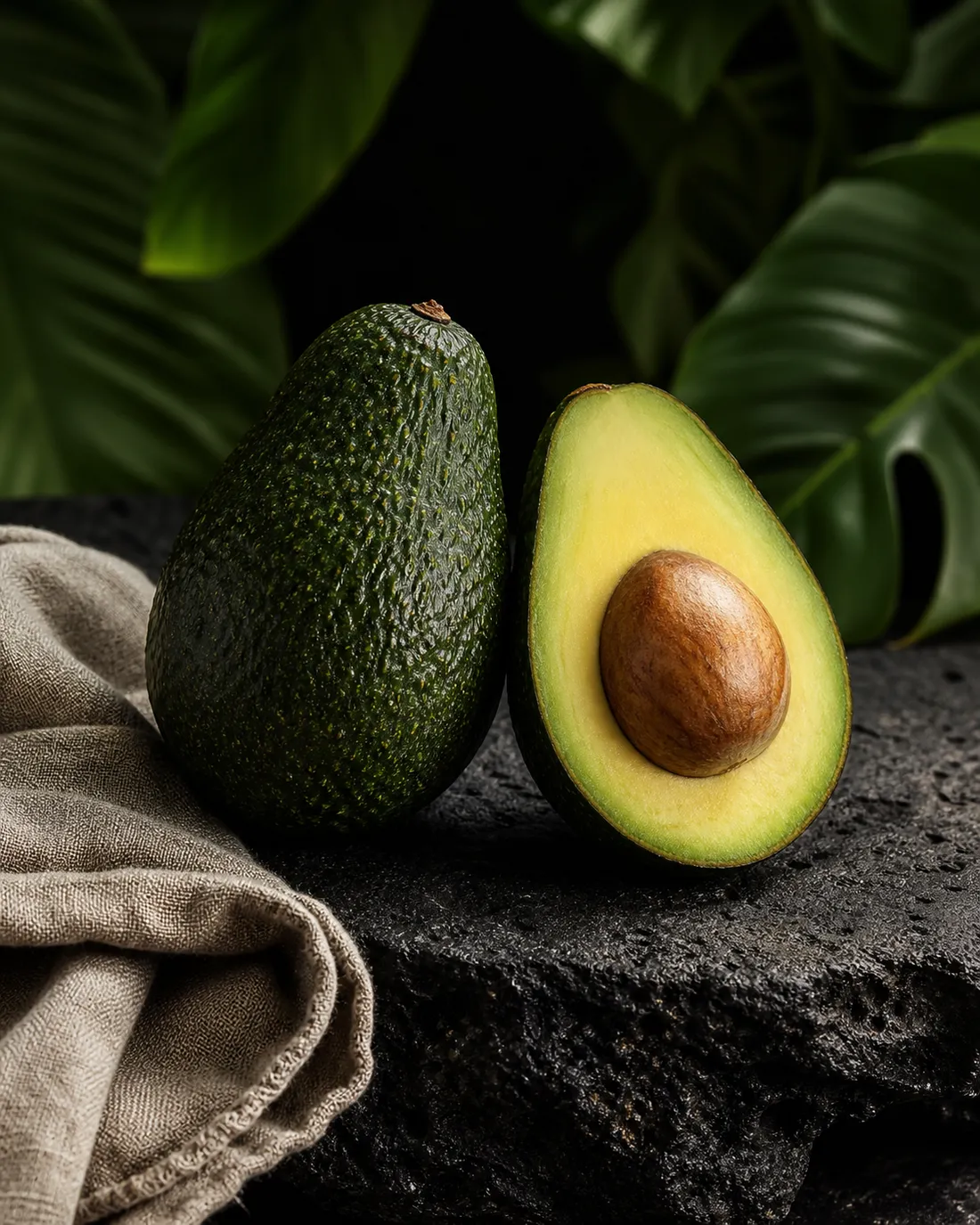
QUICK ANSWER
How many calories are in avocado?
Raw avocado contains about 160 calories per 100 g. It is more energy-dense than most fruit because it contains substantially more fat, while also supplying fibre and several micronutrients.
160 kcal / 100 gNutrition values describe a reference food state, not every individual item. Variety, water content, preparation and portion weight can change the estimate.
THE NUMBERS
Avocado nutrition facts per 100 g
The table below uses the reference state shown at the top of this page. Keeping one gram basis makes it easier to compare foods before translating the values to the portion you actually ate.
Source: USDA FoodData Central record 171705. Values may be rounded for readability.
SERVING SIZE
Calories by portion and serving weight
Words such as “small,” “medium,” “half” and “one piece” are convenient but imprecise. Grams make the estimate reproducible, particularly when natural foods vary in size.
MACROS
Carbohydrate, protein and fat explained
Fat
Most avocado calories come from fat, much of it monounsaturated. That does not make avocado unhealthy, but it does make portion weight important.
Carbohydrate
Total carbohydrate includes 6.7 g of fibre per 100 g, leaving a smaller amount of digestible carbohydrate.
Protein
Avocado contributes some protein but is not a protein-rich food. It works best as one component of a meal.
MORE THAN CALORIES
Fibre, vitamins and minerals
One food does not need to provide every nutrient. These are the characteristics most useful for understanding where avocado fits in a varied eating pattern.
Fibre
At 6.7 g per 100 g, avocado is a useful fibre source and contributes more fibre than many fruits by the same weight.
Potassium
The reference serving contains 485 mg per 100 g, making avocado a meaningful potassium contributor.
Folate
Avocado provides folate, a B vitamin involved in cell division and other normal body functions.
Fat-soluble nutrients
Its fat can help form a satisfying meal and supports absorption of fat-soluble compounds from foods eaten with it.
FOOD STATE MATTERS
How preparation changes the nutrition estimate
A reliable calorie entry should describe the food you actually ate—not merely a food with a similar name.
Mashed
Mashing does not remove calories, but it can make portions harder to judge by sight. Weigh before or after mashing.
Guacamole
Recipes may add onion, lime and herbs, plus optional oil or other ingredients. Use the recipe total rather than plain avocado when possible.
On toast
Bread, butter, eggs, seeds and sauces are separate calorie sources. Log each component.
California vs Florida
Different commercial types have their own USDA records and can differ in water and fat content.
PRACTICAL CONTEXT
How avocado can fit different goals
There is no universal “good” or “bad” food. Portion, frequency, the rest of the meal, preferences and individual health needs all matter.
Fibre goals
Avocado can contribute meaningfully to daily fibre while adding a creamy texture.
Higher-calorie needs
Its energy density makes it an efficient addition when a person needs more calories.
Calorie reduction
Avocado can still fit; measured portions prevent a healthy ingredient from unintentionally dominating the total.
Balanced meals
Combine it with a protein source, vegetables and a suitable carbohydrate rather than treating it as the entire meal.
QUALITY & SAFETY
How to choose, store and prepare it
Ripen
Leave firm avocados at room temperature until they yield gently to pressure.
Refrigerate
Once ripe, refrigeration can slow further softening.
After cutting
Cover and refrigerate promptly. Lime or lemon juice may slow surface browning.
Discard
Avoid avocado with widespread mould, fermented odour or extensive spoiled flesh.
PHOTO LOGGING
How to log avocado more accurately
A food photo can suggest the ingredient, but it cannot always reveal exact weight, hidden oil or preparation details. These checks turn an image guess into a better estimate.
- 01
Log the edible flesh only, excluding skin and pit.
- 02
Use grams because 'half an avocado' can vary dramatically by fruit size and pit size.
- 03
Choose the closest variety record when you know it; otherwise use the all-commercial-varieties record.
- 04
For guacamole, include every added ingredient and the portion of the finished recipe you ate.
COMMON QUESTIONS
Avocado calorie and nutrition questions
How many calories are in half an avocado?
It depends on edible weight. If the flesh weighs 100 g, the estimate is about 160 calories; a smaller 70 g half would be about 112.
Is avocado a fruit or a vegetable?
Botanically it is a fruit, although it is often used like a savoury vegetable in meals.
Why is avocado higher in calories than cucumber?
Avocado contains much more fat, which supplies more energy per gram than carbohydrate or protein.
Does brown avocado have more calories?
Browning itself does not meaningfully add calories. It is usually oxidation, although smell and texture should still be checked for spoilage.
Is guacamole lower in calories than avocado?
Not automatically. Its calorie density depends on the recipe and the amount of avocado, oil and other ingredients.
KEEP EXPLORING
Related food guides
SOURCES & METHOD
Where these numbers come from
Values are for raw avocado, all commercial varieties, per 100 g edible flesh. Individual cultivars and ripeness can vary.
Open USDA FoodData Central record 171705 ↗Page reviewed 26 August 2026. We show the food state, gram basis and source record so readers can check the estimate instead of treating one number as universally exact.