QUICK ANSWER
How many calories are in sweet potato?
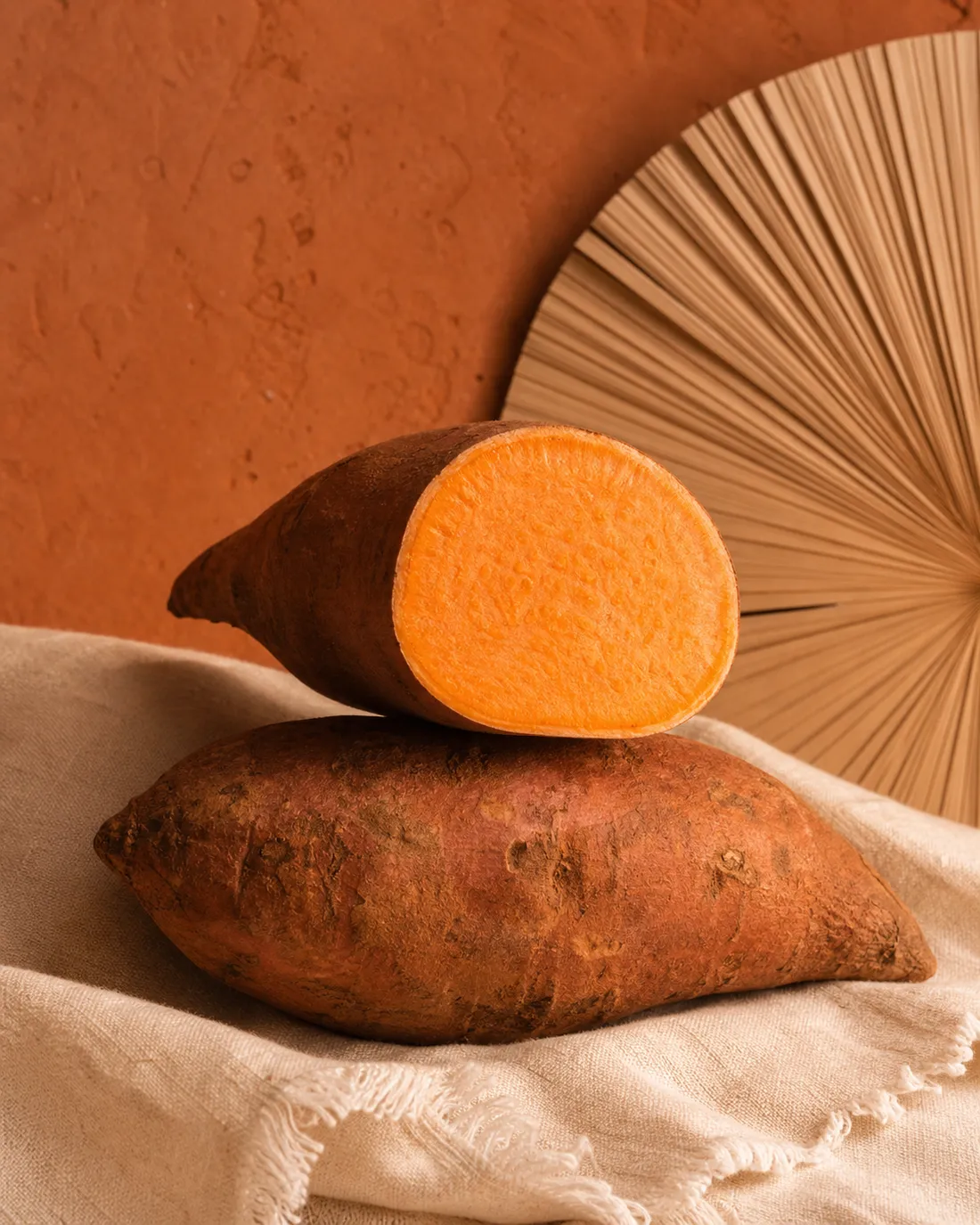
Baked sweet potato flesh contains about 90 calories per 100 g. It is primarily a carbohydrate food and is especially notable for beta-carotene, which the body can convert to vitamin A.
90 kcal / 100 gNutrition values describe a reference food state, not every individual item. Variety, water content, preparation and portion weight can change the estimate.
THE NUMBERS
Sweet potato nutrition facts per 100 g
The table below uses the reference state shown at the top of this page. Keeping one gram basis makes it easier to compare foods before translating the values to the portion you actually ate.
Source: USDA FoodData Central record 170134. Values may be rounded for readability.
SERVING SIZE
Calories by portion and serving weight
Words such as “small,” “medium,” “half” and “one piece” are convenient but imprecise. Grams make the estimate reproducible, particularly when natural foods vary in size.
MACROS
Carbohydrate, protein and fat explained
Carbohydrate
Sweet potato is mainly carbohydrate, including starch, natural sugars and fibre. The cooking method affects water content and therefore values by weight.
Protein
It contributes a small amount of protein but normally needs a separate protein food for a balanced main meal.
Fat
Plain baked flesh is almost fat-free. Butter, coconut oil, cheese, tahini and sauces can change the total substantially.
MORE THAN CALORIES
Fibre, vitamins and minerals
One food does not need to provide every nutrient. These are the characteristics most useful for understanding where sweet potato fits in a varied eating pattern.
Vitamin A
Orange-fleshed sweet potato is rich in beta-carotene, reported as vitamin A activity. This is one of its most distinctive nutritional features.
Potassium
The baked reference provides 475 mg per 100 g, a meaningful contribution.
Fibre
Baked flesh provides 3.3 g per 100 g. Eating the edible skin may add further fibre, but this record describes the flesh.
Vitamin C
Sweet potato supplies vitamin C, although cooking and holding time can influence retained amounts.
FOOD STATE MATTERS
How preparation changes the nutrition estimate
A reliable calorie entry should describe the food you actually ate—not merely a food with a similar name.
Boiled
Boiling changes water content and nutrient retention. Use a boiled record when that is what you ate.
Baked
Baking concentrates the food as moisture leaves, so calories per 100 g can differ from raw or boiled values.
Fries
Oil absorption makes sweet potato fries a different food with a much higher calorie density.
Mashed
Milk, butter, sugar or syrup must be included. Plain mash and restaurant casserole are not interchangeable.
PRACTICAL CONTEXT
How sweet potato can fit different goals
There is no universal “good” or “bad” food. Portion, frequency, the rest of the meal, preferences and individual health needs all matter.
Carbohydrate source
Sweet potato can provide energy around active days or serve as the starch component of a meal.
Fibre goals
It makes a useful contribution, especially alongside vegetables, legumes and whole grains.
Calorie reduction
Plain baked sweet potato can fit; toppings and portion size determine the final meal total.
Vitamin A intake
Orange-fleshed varieties are especially concentrated in provitamin A carotenoids.
QUALITY & SAFETY
How to choose, store and prepare it
Before cooking
Store whole sweet potatoes in a cool, dry, ventilated place rather than a sealed damp bag.
After baking
Refrigerate cooked sweet potato promptly in a covered container.
Reheat
Heat leftovers thoroughly and avoid repeated long periods at room temperature.
Choose
Avoid roots with extensive soft rot, mould, leaking areas or strong off-odours.
PHOTO LOGGING
How to log sweet potato more accurately
A food photo can suggest the ingredient, but it cannot always reveal exact weight, hidden oil or preparation details. These checks turn an image guess into a better estimate.
- 01
Weigh the edible cooked portion, especially when the skin was left behind.
- 02
Match the preparation: baked, boiled, mashed, fried and casserole records are different.
- 03
Log oils, butter, sugar, marshmallow, cheese and sauces separately.
- 04
For batch cooking, record the cooked recipe weight to divide portions accurately.
COMMON QUESTIONS
Sweet potato calorie and nutrition questions
How many calories are in one baked sweet potato?
The answer depends on cooked edible weight. A 130 g portion is about 117 calories before toppings; 200 g is about 180.
Is sweet potato healthier than white potato?
They have different nutrient profiles rather than a universal winner. Sweet potato is especially rich in beta-carotene, while preparation and the whole meal matter.
Does the skin count?
Yes if you eat it. This reference is for baked flesh, so use a skin-included record or recipe when appropriate.
Why do baked and boiled values differ?
Water gain or loss changes nutrient concentration per 100 g, even when the underlying food is similar.
Are sweet potato fries the same nutritionally?
No. Frying adds oil and usually sodium, so use a fries-specific record.
KEEP EXPLORING
Related food guides
SOURCES & METHOD
Where these numbers come from
Values are for sweet potato baked in the skin, flesh only, without salt, per 100 g. Variety, moisture loss and toppings can change a serving.
Open USDA FoodData Central record 170134 ↗Page reviewed 26 August 2026. We show the food state, gram basis and source record so readers can check the estimate instead of treating one number as universally exact.