QUICK ANSWER
How many calories are in chicken breast?
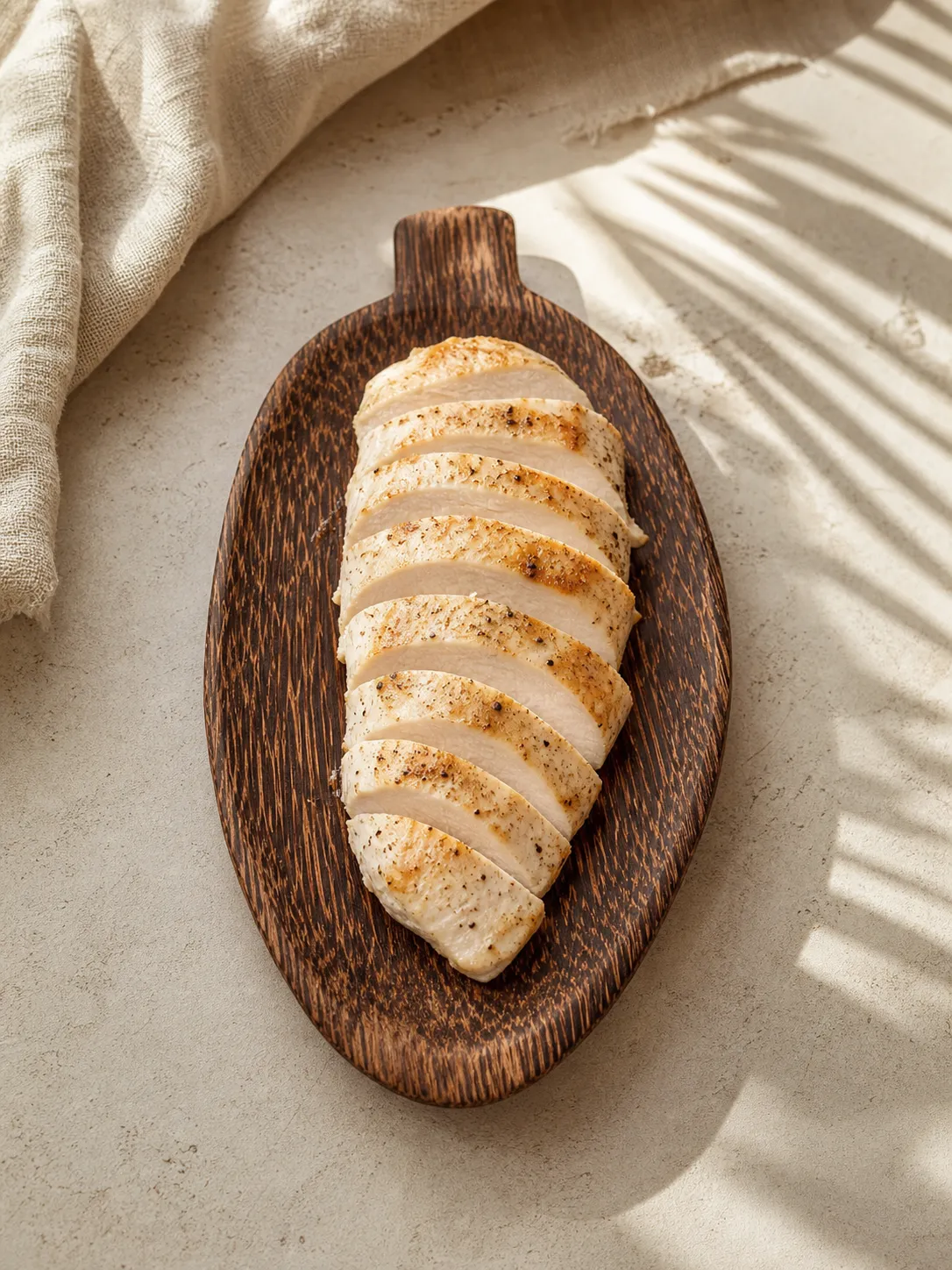
Roasted chicken breast meat contains about 165 calories and 31 g of protein per 100 g. The value is for cooked meat only; skin, marinades, breading, oil and sauces can change the result.
165 kcal / 100 gNutrition values describe a reference food state, not every individual item. Variety, water content, preparation and portion weight can change the estimate.
THE NUMBERS
Chicken breast nutrition facts per 100 g
The table below uses the reference state shown at the top of this page. Keeping one gram basis makes it easier to compare foods before translating the values to the portion you actually ate.
Source: USDA FoodData Central record 171477. Values may be rounded for readability.
SERVING SIZE
Calories by portion and serving weight
Words such as “small,” “medium,” “half” and “one piece” are convenient but imprecise. Grams make the estimate reproducible, particularly when natural foods vary in size.
MACROS
Carbohydrate, protein and fat explained
Protein
Roasted breast is protein-dense, providing about 31 g per 100 g. Cooked weight is crucial because water loss concentrates the meat.
Fat
Meat-only breast is relatively lean. Leaving the skin on or adding oil increases fat and calories.
Carbohydrate
Plain chicken breast contains no meaningful carbohydrate. Breading, sweet marinades and sauces add carbohydrate.
MORE THAN CALORIES
Fibre, vitamins and minerals
One food does not need to provide every nutrient. These are the characteristics most useful for understanding where chicken breast fits in a varied eating pattern.
Niacin
Chicken breast is a concentrated source of niacin, a B vitamin involved in normal energy metabolism.
Vitamin B6
Poultry contributes vitamin B6, which supports numerous metabolic processes.
Selenium
Chicken breast supplies selenium, an essential trace mineral.
Sodium
Plain roasted meat is moderate in naturally occurring sodium; brining, seasoning blends and sauces can raise it sharply.
FOOD STATE MATTERS
How preparation changes the nutrition estimate
A reliable calorie entry should describe the food you actually ate—not merely a food with a similar name.
Roasted plain
This is the closest match to the reference record when the skin is removed and little or no added fat remains.
Grilled
Grilled breast may be similar, but marinades, oil and moisture loss can change the estimate.
Breaded or fried
Coating and absorbed oil make this a distinctly higher-calorie preparation.
Skin-on
Chicken skin adds fat and calories. Choose a skin-on record when it was eaten.
PRACTICAL CONTEXT
How chicken breast can fit different goals
There is no universal “good” or “bad” food. Portion, frequency, the rest of the meal, preferences and individual health needs all matter.
Protein goals
Its high protein density makes chicken breast an efficient way to add protein to a meal.
Calorie reduction
A measured lean portion can fit well, but sauces, oil and large restaurant portions still matter.
Active lifestyles
Protein supports normal tissue maintenance and repair when total nutrition and training are appropriate.
Plant-forward meals
Chicken can be a smaller component alongside vegetables, grains and legumes rather than the largest item on the plate.
QUALITY & SAFETY
How to choose, store and prepare it
Cook safely
Health authorities recommend checking poultry with a food thermometer; colour alone is not a reliable safety test.
Refrigerate
Chill cooked chicken promptly in a covered container and keep the refrigerator at a safe temperature.
Leftovers
Use refrigerated cooked poultry within the timeframe recommended by your local food-safety authority.
Cross-contamination
Keep raw poultry and its juices away from ready-to-eat foods, utensils and surfaces.
PHOTO LOGGING
How to log chicken breast more accurately
A food photo can suggest the ingredient, but it cannot always reveal exact weight, hidden oil or preparation details. These checks turn an image guess into a better estimate.
- 01
Use cooked weight with a cooked-food record; raw and cooked grams are not interchangeable.
- 02
Confirm whether skin was eaten and whether the entry says meat only.
- 03
Add cooking oil, marinade, breading and sauce separately unless using a complete recipe record.
- 04
For a mixed bowl, weigh chicken before combining it when practical.
COMMON QUESTIONS
Chicken breast calorie and nutrition questions
How many calories are in 100 g of chicken breast?
This roasted, meat-only reference provides about 165 calories per 100 g.
How much protein is in chicken breast?
The reference contains about 31 g of protein per 100 g cooked meat.
Why does raw chicken weigh more than cooked chicken?
Cooking drives off water. The cooked portion weighs less and nutrients become more concentrated per gram.
Does grilling add calories?
Heat itself does not, but oil, marinades, sauces and different moisture loss can change the final value.
Can I tell chicken is safe by looking at it?
No. Use a food thermometer and current food-safety guidance rather than colour alone.
KEEP EXPLORING
Related food guides
SOURCES & METHOD
Where these numbers come from
Values are for broiler or fryer chicken breast, meat only, cooked and roasted, per 100 g. Added ingredients and cooking yield can materially change a serving.
Open USDA FoodData Central record 171477 ↗Page reviewed 26 August 2026. We show the food state, gram basis and source record so readers can check the estimate instead of treating one number as universally exact.