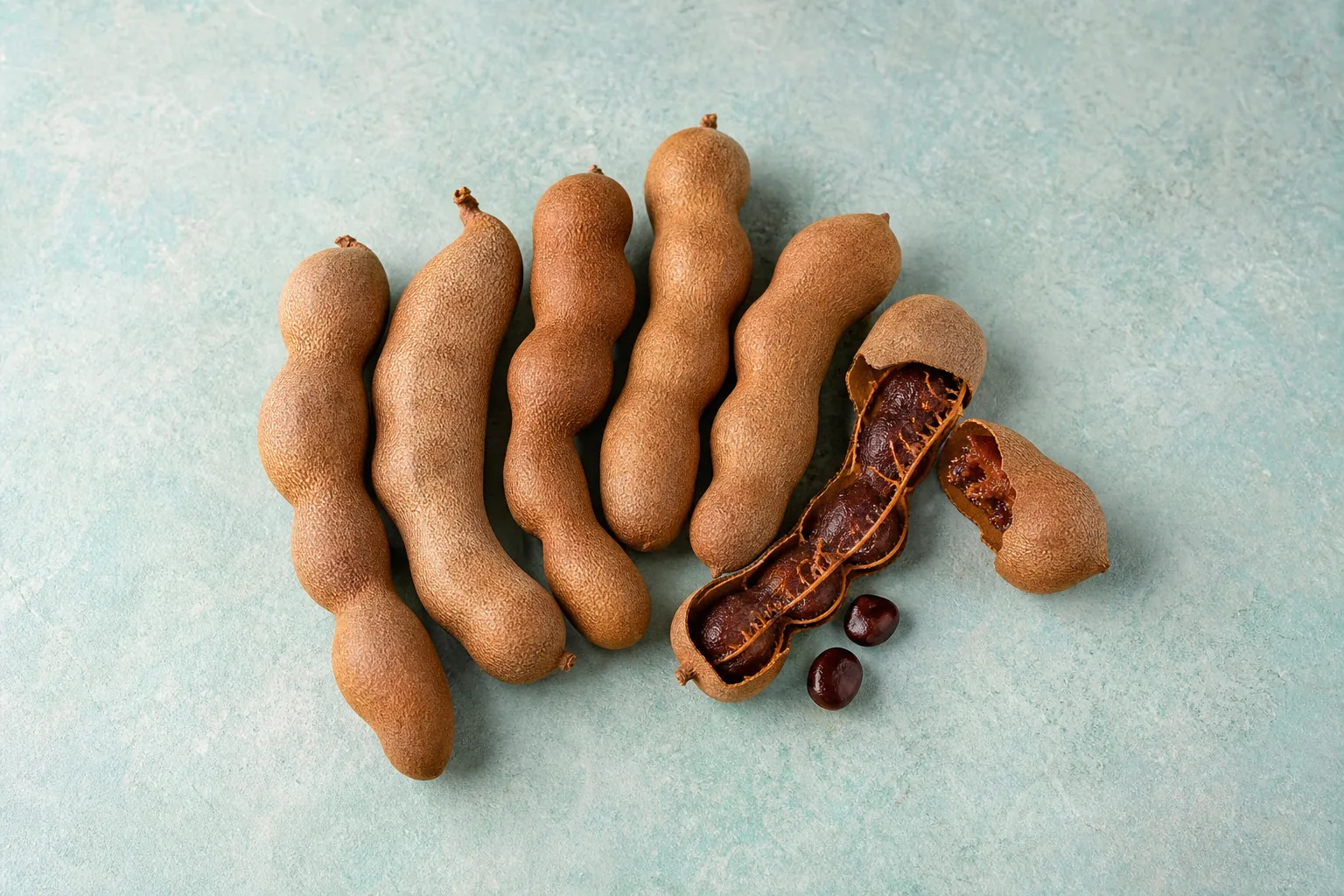
QUICK ANSWER
How many calories are in raw tamarind?
The selected raw-tamarind record provides 239 kcal per 100 g. Scale from the matching edible amount and keep other states separate.
239 kcal / 100 gNutrition values describe a reference food state, not every individual item. Variety, water content, preparation and portion weight can change the estimate.
THE NUMBERS
Raw tamarind nutrition facts per 100 g
The values below use the reference state shown at the top of this page. Keeping one gram basis makes it easier to compare foods before translating the values to the portion you actually ate.
- Calories
- 239 kcal
- Protein
- 2.8 g
- Carbohydrate
- 62.5 g
- Fat
- 0.6 g
- Fibre
- 5.1 g
- Potassium
- 628 mg
- Magnesium
- 92 mg
- Iron
- 2.8 mg
Source: USDA FoodData Central SR Legacy record 167763. Values may be rounded for readability.
SERVING SIZE
Calories by portion and serving weight
Words such as “small,” “medium,” “half” and “one piece” are convenient but imprecise. Grams make the estimate reproducible, particularly when natural foods vary in size.
MACROS
Carbohydrate, protein and fat explained
Protein
2.8 g per 100 g. From Tamarinds, raw.
Carbohydrate
62.5 g per 100 g. From Tamarinds, raw.
Fat
0.6 g per 100 g. From Tamarinds, raw.
MORE THAN CALORIES
Fibre, vitamins and minerals
One food does not need to provide every nutrient. These are the characteristics most useful for understanding where raw tamarind fits in a varied eating pattern.
Potassium
628 mg per 100 g in the selected USDA record.
Magnesium
92 mg per 100 g in the selected USDA record.
Iron
2.8 mg per 100 g in the selected USDA record.
Thiamin
0.428 mg per 100 g in the selected USDA record.
FOOD STATE MATTERS
How preparation changes the nutrition estimate
A reliable calorie entry should describe the food you actually ate—not merely a food with a similar name.
Raw tamarind pulp
Selected reference.
Sweetened tamarind paste
Use the exact product label.
Tamarind concentrate
Use the concentrate label and amount.
Tamarind drink or candy
Use the finished product or complete recipe.
PRACTICAL CONTEXT
How raw tamarind can fit different goals
There is no universal “good” or “bad” food. Portion, frequency, the rest of the meal, preferences and individual health needs all matter.
Portion math
At 239 kcal per 100 g, the 2 g example is 4.8 kcal.
Fibre check
The selected record lists 5.1 g fibre per 100 g.
Protein check
The selected record lists 2.8 g protein per 100 g.
Best logging move
Use edible raw pulp weight and keep sugar, water and other recipe ingredients separate.
QUALITY & SAFETY
How to choose, store and prepare it
Store
Keep tamarind according to seller or package guidance.
After opening or cutting
Keep exposed pulp protected and appropriately chilled when the package directs.
Prepare
Remove shell and seeds as appropriate and use clean utensils.
Safety boundary
Packaged pastes and concentrates can have different ingredients and storage directions; this nutrient record sets no storage duration.
PHOTO LOGGING
How to log raw tamarind more accurately
A food photo can suggest the ingredient, but it cannot always reveal exact weight, hidden oil or preparation details. These checks turn an image guess into a better estimate.
- 01
Match the exact reference state: Tamarinds, raw.
- 02
Use edible grams. Calories are scaled from the selected per-100-g record; named portion weights come from the same local USDA record, while explicitly labelled gram examples are calculated.
- 03
Log oil, sauce, sweetener, salt and recipe ingredients separately.
- 04
Use a separate record when preparation changes the food state.
COMMON QUESTIONS
Raw tamarind calorie and nutrition questions
How many calories are in 100 g of tamarinds?
239 kcal in the selected Tamarinds, raw record.
How much fibre is in tamarinds?
5.1 g per 100 g in the selected record.
Which tamarinds state does this page use?
Tamarinds, raw. State and preparation are part of the answer.
Does this include sweetened tamarind paste?
No. The selected record is raw tamarind, so sweetened paste needs its own label.
How are the portion calories calculated?
Each portion is scaled from 239 kcal per 100 g. Named weights come from the selected source record; calculated gram examples are labelled.
KEEP EXPLORING
Related food guides
SOURCES & METHOD
Where these numbers come from
Tamarinds, raw, per 100 g edible portion. Numeric nutrition claims use the nutrition-reviewed local USDA record. Named portion claims use source-held weights; explicitly labelled gram examples are calculations from the per-100-g record. The nutrient record does not establish storage duration, clinical advice or food-safety limits; use package directions and current authoritative guidance where relevant.
Open USDA FoodData Central SR Legacy record 167763 ↗Page reviewed 26 August 2026. We show the food state, gram basis and source record so readers can check the estimate instead of treating one number as universally exact.